Helicopter Private Pilot License in Florida: Requirements & Timeline
by Ray Deptula
For many aspiring aviators, the first major step toward a career in the sky is earning a Private Pilot License (PPL). If you’re drawn to the unique freedom of vertical flight, understanding the specific requirements and timeline for a helicopter PPL is essential. Florida’s excellent weather and robust aviation infrastructure make it an ideal place to start, but knowing the process beforehand helps you plan effectively.
At USATS, we guide students through every step of their flight training journey. This guide breaks down the FAA prerequisites, training stages, and a realistic timeline for obtaining your helicopter private pilot license in the Sunshine State.
Helicopter PPL Prerequisites: What You Need to Start
Before you can begin logging flight hours, the FAA has a few initial requirements. These aren’t just paperwork; they ensure you are ready and eligible for flight training, a key component of our aviation safety standards.
Key prerequisites include:
- Age: You must be at least 16 years old to solo a helicopter and 17 to receive your private pilot certificate.
- Language Proficiency: You must be able to read, speak, write, and understand English.
- Medical Certificate: You need at least a third-class FAA medical certificate from an authorized Aviation Medical Examiner (AME). It’s wise to get this done early to ensure you have no underlying health conditions that could prevent you from flying.
For international students, there are additional requirements, including securing an M-1 student visa. USATS has extensive experience supporting international students through this process, offering guidance on everything from visa applications to TSA approvals.
The Helicopter PPL Training Steps
Earning your helicopter PPL involves a combination of ground school and hands-on flight training. At USATS, our structured FAA Part 141 program ensures you cover all necessary knowledge and skills efficiently.
Step 1: Ground School
This is where you build your foundational knowledge. You’ll learn about:
- Helicopter aerodynamics and systems
- FAA regulations and airspace rules
- Weather patterns and decision-making
- Navigation and flight planning
Completing ground school prepares you for the FAA written knowledge test, a multiple-choice exam you must pass before your final practical test.
Step 2: Flight Training
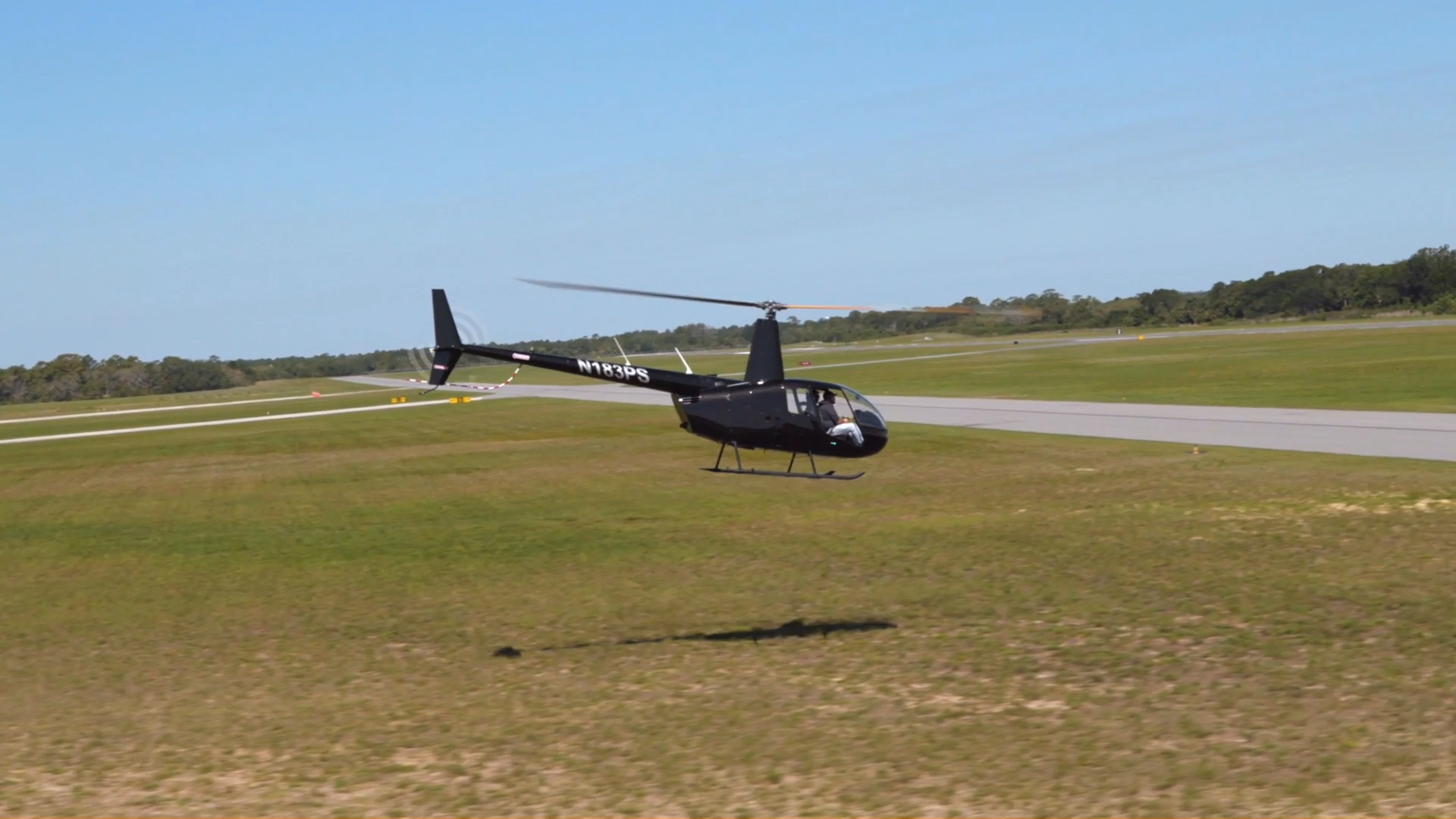
This is where the real fun begins. Under the guidance of a Certified Flight Instructor (CFI), you’ll learn to fly a helicopter. Your training will cover:
- Basic Maneuvers: Takeoffs, landings, hovering, and flight control.
- Advanced Maneuvers: Autorotations (a critical emergency procedure), confined area operations, and slope landings.
- Cross-Country Flying: Planning and executing flights to other airports.
- Solo Flight: Once your instructor deems you ready, you’ll complete several solo flights to build confidence and experience.
The FAA requires a minimum of 40 flight hours for a helicopter PPL under Part 61, which includes at least 20 hours with an instructor and 10 hours of solo flight. Part 141 programs, like those at USATS, have a minimum of 35 hours and offer a more structured curriculum.
How Long Does It Take to Get a Helicopter License in Florida?
A common question is, “How long will this take?” The answer depends heavily on your schedule and commitment.
- Full-Time Students: If you can train several times a week, you could potentially earn your helicopter PPL in 3 to 5 months. Florida’s consistent flying weather is a major advantage here, as it minimizes weather-related cancellations.
- Part-Time Students: If you’re training around a work or school schedule, the timeline will be longer, typically 6 to 9 months.
The key to finishing efficiently is consistency. Flying regularly helps you retain skills and progress faster, which is why the reliable weather on Florida’s Space Coast is such a benefit for our students.
The Final Step: The Checkride
Once you’ve completed your training, passed the written exam, and met all flight hour requirements, your instructor will endorse you for the final practical test, known as the “checkride.”
The checkride consists of two parts:
- Oral Exam: A one-on-one session with an FAA Designated Pilot Examiner (DPE) who will quiz you on your aeronautical knowledge.
- Flight Test: You’ll fly with the DPE and demonstrate your ability to safely and proficiently perform various maneuvers.
Passing the checkride is the final hurdle. Once you do, you’ll officially be a certified helicopter private pilot!
Your Next Steps with USATS
Starting your helicopter training journey is a significant but achievable goal. At USATS, we simplify the process by providing a clear, structured path in an ideal training environment.
If you’re ready to begin, here’s what to do next:
- Explore Our Programs: Get familiar with our Helicopter Training Programs to see the full scope of what we offer.
- Schedule a Discovery Flight: There’s no better way to know if flying is for you than to try it. A Discovery Flight puts you in the cockpit with an instructor.
- Contact Admissions: Our team can answer your questions about enrollment, financing, and creating a personalized training timeline.
With the right preparation and a supportive flight school, you can turn your dream of flying a helicopter into a reality.
FAQ
For more detailed answers to common questions, please see our dedicated Helicopter Private Pilot License FAQ page.
Ready to earn your wings? Explore the Helicopter Private Pilot License program and schedule your discovery flight today!